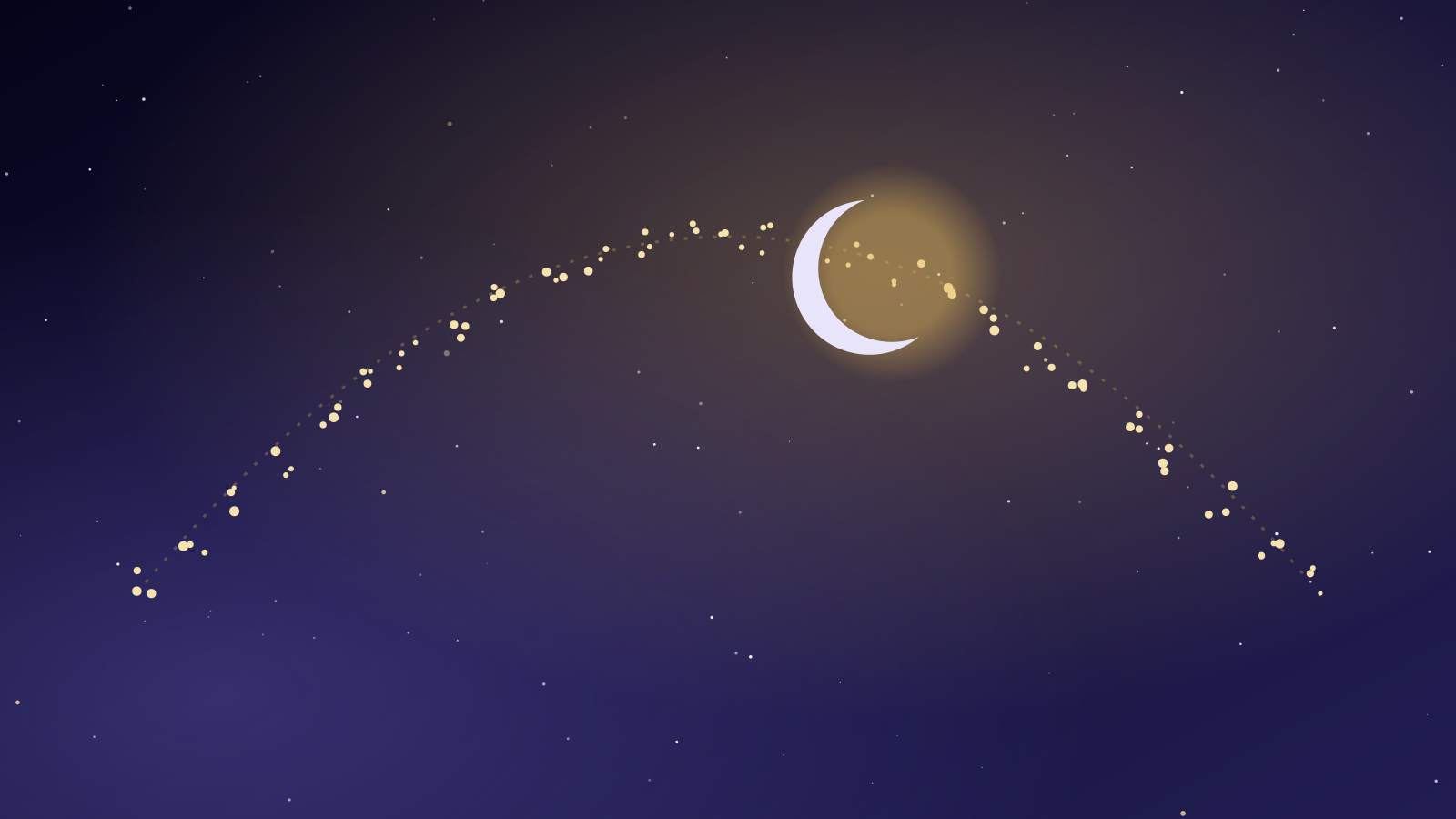
Have you ever wondered why South Asian families pay so much attention to your "birth star" rather than your month sign? The answer lies in the ancient rhythm of the Moon.
While Western astrology tracks the Sun's yearly journey, Vedic astrology watches the Moon's intimate nightly path. Across Sri Lanka and India, the twenty-seven star clusters known as the nakshatras form the true heartbeat of personal astrology.
How the 27 Lunar Constellations Work
The Moon takes about 27.3 days to orbit the Earth against the background of the stars.
Each night, the Moon rests alongside a different prominent group of stars. Ancient astronomers divided the 360-degree sky into 27 equal sectors of 13 degrees and 20 minutes each, creating the system of lunar mansions.
In the sacred Bhagavad Gita (10.21), Sri Krishna highlights the special bond between the Moon and these starry stations:
नक्षत्राणामहं शशी Nakṣatrāṇāmahaṁ śaśī "Among the starry nakshatras, I am the Moon."
Whenever someone asks for your birth star (Janma Nakshatra), they are asking which of these 27 stellar stations the Moon was passing through at the minute you were born.
Why Each Sign Contains Three Star Clusters
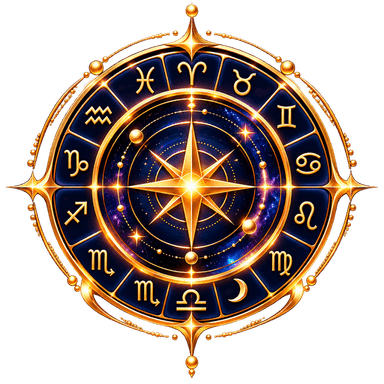
There are twelve zodiac signs, but twenty-seven nakshatras. Because 27 divided by 12 equals 2.25, every single zodiac sign contains two and a quarter nakshatras.
To measure this with extreme precision, ancient mathematicians divided each nakshatra into four equal quarters, called padas:
- Each nakshatra spans 13° 20'.
- Each pada spans 3° 20'.
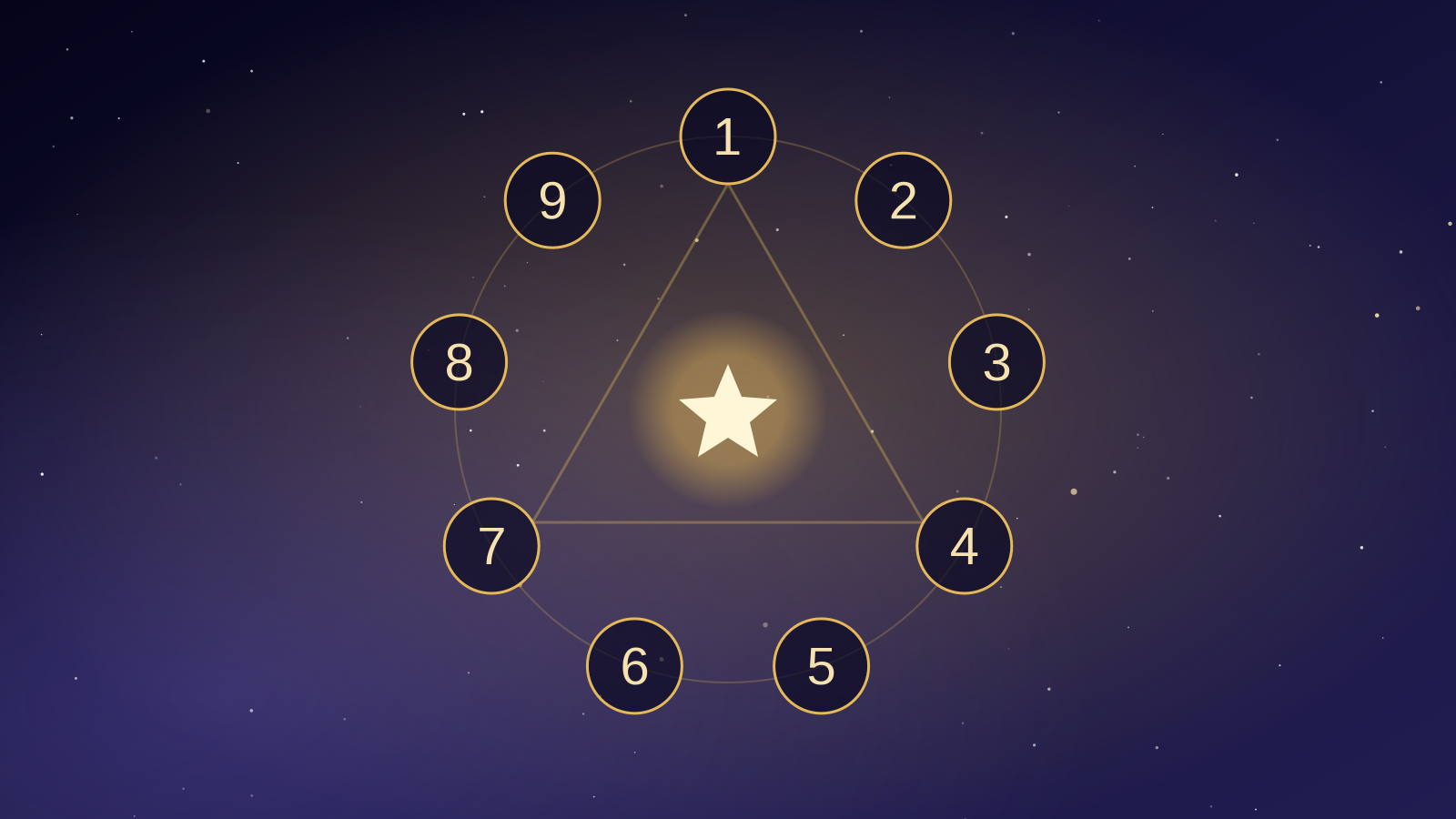
- Exactly nine padas make up one 30-degree zodiac sign.
This is why two people born under the same Moon sign can have completely different temperaments. One person's Moon might sit in the fiery first pada, while another's sits in an earthy third pada.
Quick Guide to the 27 Nakshatras
Here is the complete sequence of the 27 lunar mansions:
| # | Nakshatra Name | Celestial Span | Ruling Planet | Core Quality |
|---|---|---|---|---|
| 1 | Ashwini | Aries 0°00' – 13°20' | Ketu | Swift action, vitality, healing |
| 2 | Bharani | Aries 13°20' – 26°40' | Venus | Creative passion, endurance, transformation |
| 3 | Krittika | Aries 26°40' – Taurus 10°00' | Sun | Sharp intellect, purifying energy, truth |
| 4 | Rohini | Taurus 10°00' – 23°20' | Moon | Charm, artistic beauty, material growth |
| 5 | Mrigashira | Taurus 23°20' – Gemini 6°40' | Mars | Restless curiosity, research, gentle spirit |
| 6 | Ardra | Gemini 6°40' – 20°00' | Rahu | Emotional breakthrough, clarity through storms |
| 7 | Punarvasu | Gemini 20°00' – Cancer 3°20' | Jupiter | Renewal, optimism, return of good fortune |
| 8 | Pushya | Cancer 3°20' – 16°40' | Saturn | Deep nourishment, wisdom, spiritual grounding |
| 9 | Ashlesha | Cancer 16°40' – Leo 0°00' | Mercury | Intense intuition, protective focus, psychology |
| 10 | Magha | Leo 0°00' – 13°20' | Ketu | Ancestral pride, noble leadership, dignity |
| 11 | Purva Phalguni | Leo 13°20' – 26°40' | Venus | Joy, romance, social harmony, relaxation |
| 12 | Uttara Phalguni | Leo 26°40' – Virgo 10°00' | Sun | Reliable friendship, generosity, patron spirit |
| 13 | Hasta | Virgo 10°00' – 23°20' | Moon | Skilled hands, craft, quick wit, resourcefulness |
| 14 | Chitra | Virgo 23°20' – Libra 6°40' | Mars | Brilliant design, aesthetics, multifaceted skill |
| 15 | Swati | Libra 6°40' – 20°00' | Rahu | Independence, trade, diplomacy, gentle freedom |
| 16 | Vishakha | Libra 20°00' – Scorpio 3°20' | Jupiter | Laser-focused ambition, triumph over hurdles |
| 17 | Anuradha | Scorpio 3°20' – 16°40' | Saturn | Devoted friendship, travel, quiet resilience |
| 18 | Jyeshtha | Scorpio 16°40' – Sagittarius 0°00' | Mercury | Seniority, protective elder, keen perception |
| 19 | Mula | Sagittarius 0°00' – 13°20' | Ketu | Getting to the root, truth-seeking, release |
| 20 | Purva Ashadha | Sagittarius 13°20' – 26°40' | Venus | Invincible willpower, persuasion, purification |
| 21 | Uttara Ashadha | Sagittarius 26°40' – Capricorn 10°00' | Sun | Enduring victory, quiet integrity, duty |
| 22 | Shravana | Capricorn 10°00' – 23°20' | Moon | Patient listening, oral wisdom, education |
| 23 | Dhanishta | Capricorn 23°20' – Aquarius 6°40' | Mars | Rhythm, musical gift, wealth through teamwork |
| 24 | Shatabhisha | Aquarius 6°40' – 20°00' | Rahu | Healing secrets, solitude, vision beyond horizons |
| 25 | Purva Bhadrapada | Aquarius 20°00' – Pisces 3°20' | Jupiter | Intense passion, philosophical commitment |
| 26 | Uttara Bhadrapada | Pisces 3°20' – 16°40' | Saturn | Deep meditation, patience, steady compassion |
| 27 | Revati | Pisces 16°40' – 30°00' | Mercury | Safe travels, shelter, gentle guidance, closure |
How Your Birth Star Shapes Your Life Path
Your Janma Nakshatra is not just a personality label. It sets up three crucial pillars of practical life in the Vedic tradition:
1. Your Personal Life Clock (Vimshottari Dasha)
The ruler of your birth star determines which planetary period you are born into.
If your Moon was in Rohini, you begin life under the gentle cycle of the Moon. From that opening chapter, your life unfolds through a fixed sequence of planetary chapters (dashas) spanning 120 years.
2. Traditional Baby Names (Namakarana)
Each of the four padas of a nakshatra has a specific Sanskrit sound associated with it.
Traditional families choose their children's starting name letters based on the pada the Moon occupied at birth. The goal is to choose a name that resonates harmoniously with the child's natural planetary frequency.
3. Marriage Compatibility (Porondam / Koota)
When two families compare horoscopes for marriage, the calculations rely directly on comparing the couple's two birth stars.
The match evaluates how their minds handle stress, daily habits, and emotional connection. You can read our detailed breakdown in our guide to horoscope matching.
Finding Your Personal Birth Star
To find your exact nakshatra and pada, you need your birth date, exact minute of birth, and birthplace.
Because the Moon moves quickly, being off by an hour can sometimes push your Moon into an adjacent star cluster.
You can calculate your birth star in seconds using our free horoscope tool. Once you know your star, you will see how ancient skywatchers mapped the quiet rhythms of the human mind.