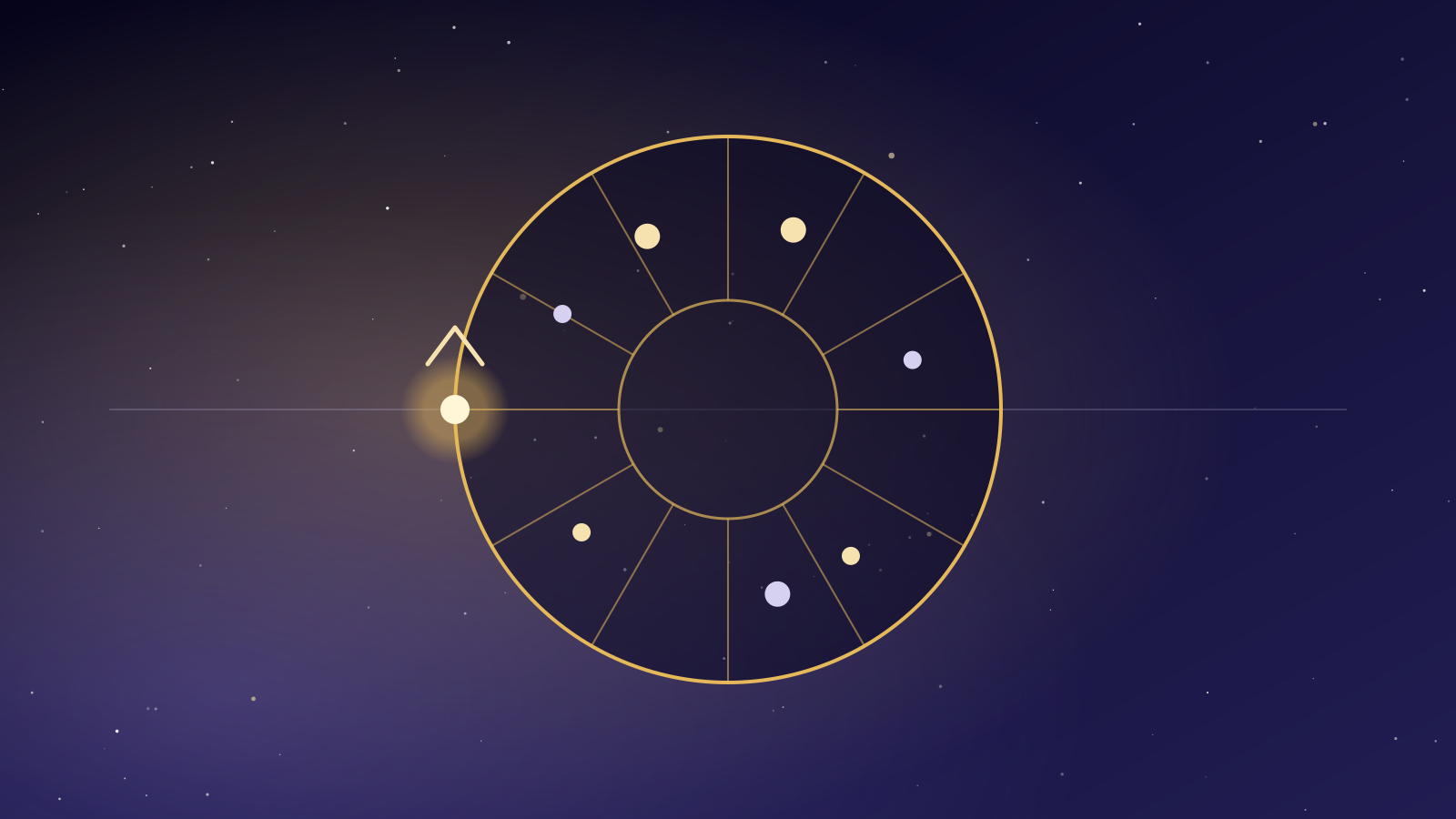
Looking at a birth chart for the very first time can feel like trying to decipher an ancient secret code. Between the mysterious grid of boxes, planetary glyphs, and Sanskrit terms, it is hard to know where to even begin.
A birth chart is not a rigid list of fixed fortunes or inescapable curses. In traditional astrology, it is simply an astronomical snapshot of the sky taken from the exact place and minute you were born.
What That 12-Box Grid Really Tells You
Think of your birth chart as a high-resolution snapshot of the solar system, captured at the exact second you took your first breath.
If someone had stepped outside the hospital and aimed a camera up at the sky, where were the planets standing? Was the Sun blazing overhead at noon, or was the Moon quietly slipping behind the horizon?
Your chart maps out those exact planetary positions across twelve distinct life areas, known as houses. Traditional astrologers never treated this as a locked-in destiny or an inescapable curse.
Instead, it works much like an energetic weather report. It highlights your natural talents, your emotional blind spots, and the seasons of life where you are most likely to grow.
The Three Building Blocks You Need to Know
You do not need to memorize hundreds of ancient rules to understand your chart. Every single chart in the world is built from just three moving parts:
1. The Twelve Signs: The Celestial Backdrop
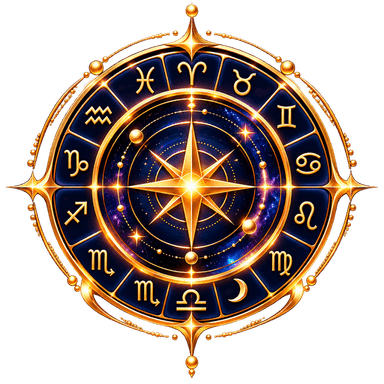
Imagine the sky as a giant 360-degree circular belt around the Earth. Ancient skywatchers divided that belt into twelve equal 30-degree neighborhoods, starting with Aries and finishing with Pisces.
When someone says your Moon is in Taurus, it simply means that from where you were born, the Moon lined up directly in front of the Taurus stars.
Each sign acts like a distinct lens or temperament, coloring how a planet behaves. You can explore each one in our guide to the 12 zodiac signs.
2. The Nine Planets: The Active Players
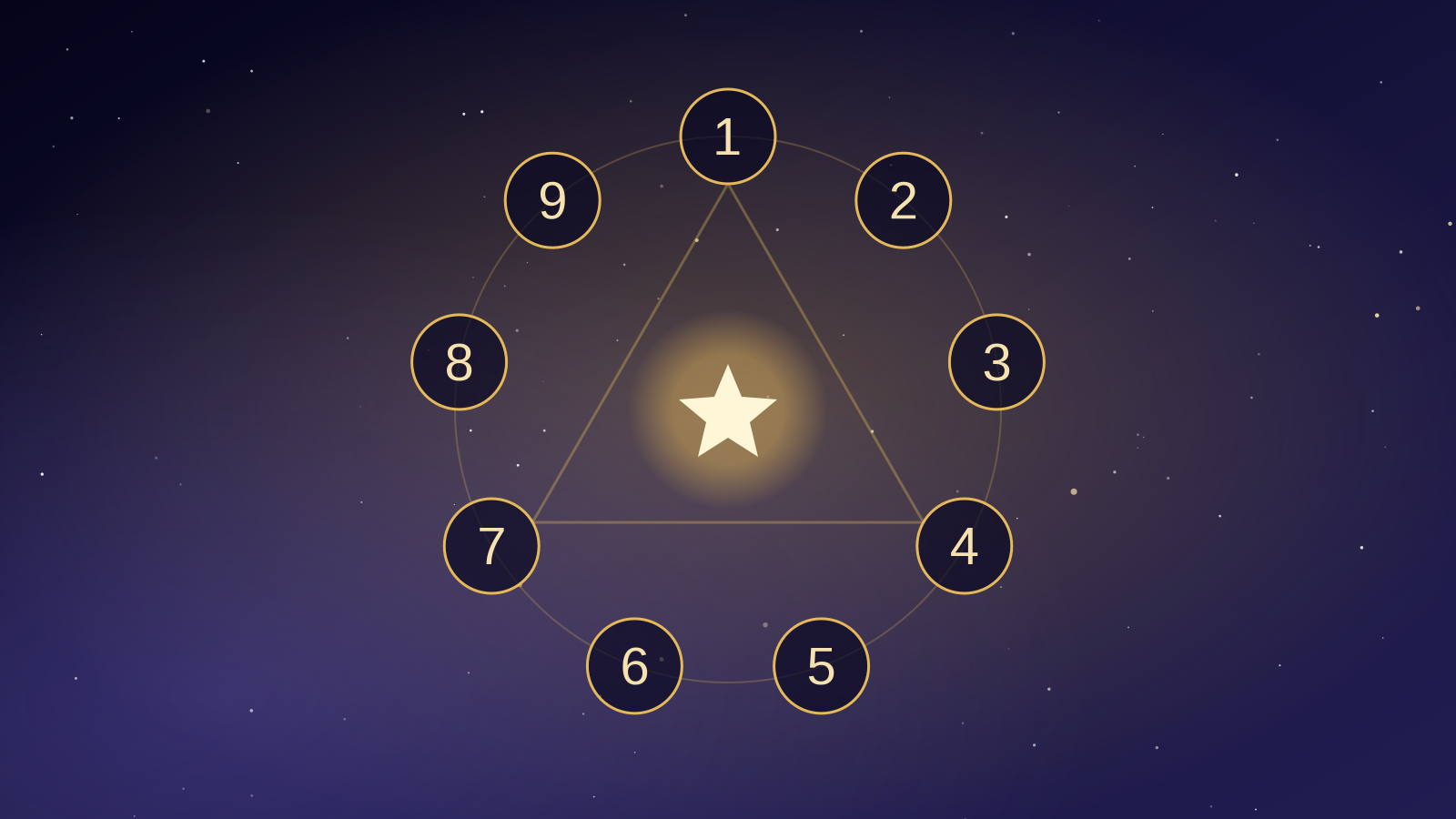
In Vedic astrology—the traditional system practiced throughout Sri Lanka and India—astrologers track nine key heavenly forces, traditionally called grahas. Seven are physical bodies, while two are calculated lunar nodes:
| Planet | What It Represents in Life |
|---|---|
| Sun (Surya) | Your core identity, self-respect, purpose, and father |
| Moon (Chandra) | Your emotional mind, memories, mother, and inner peace |
| Mars (Mangala) | Physical courage, drive, energy, siblings, and property |
| Mercury (Budha) | Quick intellect, speech, education, commerce, and logic |
| Jupiter (Guru) | Deep wisdom, ethical guidance, teachers, and children |
| Venus (Shukra) | Love, artistic taste, relationships, and daily comfort |
| Saturn (Shani) | Discipline, patience, hard work, and life lessons |
| Rahu (North Node) | Intense ambition, foreign connections, and innovation |
| Ketu (South Node) | Spiritual surrender, detachment, and sudden insight |
Rahu and Ketu are not physical rocks in space. They are the mathematical points where the Moon's orbital path intersects the Sun's path, producing eclipses.
3. The Twelve Houses: The Stages of Life
While the signs stay fixed in the starry background, the twelve houses are anchored to the Earth's daily 24-hour rotation. Each house represents a specific stage where your daily life plays out:
| House | Life Area It Governs |
|---|---|
| 1st House | Physical body, personality, appearance, and vitality |
| 2nd House | Family roots, speech, personal savings, and food habits |
| 3rd House | Courage, younger siblings, communication, and hands-on skills |
| 4th House | Home, mother, emotional foundation, and inner comfort |
| 5th House | Creativity, intellect, education, children, and romance |
| 6th House | Daily duties, health routines, and overcoming obstacles |
| 7th House | Marriage, partnerships, contracts, and public trust |
| 8th House | Transformation, joint finances, longevity, and mysteries |
| 9th House | Higher wisdom, ethics, philosophy, father, and long journeys |
| 10th House | Career legacy, reputation, social status, and achievements |
| 11th House | Lifelong friendships, networks, income gains, and hopes fulfilled |
| 12th House | Solitude, deep sleep, expenses, and spiritual surrender |
Whenever a planet sits inside a house, it brings its natural energy straight into that life area. For instance, Mercury in the 2nd house often points to someone who earns through speaking, teaching, or writing.
Why Your Rising Sign Steers the Whole Ship
The most critical point in any birth chart is the rising sign, known in Sanskrit as the Lagna or Ascendant.
Because the Earth spins on its axis once every 24 hours, each of the twelve zodiac signs appears to rise on the eastern horizon for roughly two hours. The exact constellation rising at the minute you were born becomes your Lagna.
Your Lagna establishes your 1st house, and all other eleven houses are counted in order from that starting point. That is why two babies born on the same day in the same town, but four hours apart, will have completely different charts and life experiences.
Why Every Single Minute Really Matters
Astrology relies on precise spherical mathematics rather than guesswork:
- Exact minute: Because the rising sign shifts roughly every two hours, an error of fifteen minutes can shift your rising sign or move planets into different houses.
- Geographic coordinates: Your view of the eastern horizon depends entirely on your latitude and longitude on Earth.
- Historical time zones: Countries have altered standard clock offsets repeatedly. Sri Lanka, for example, adjusted clock offsets during World War II and again between 1996 and 2006. Our automated horoscope tool accounts for these historical shifts automatically.
Three Traditional Ways to Draw a Chart
Depending on where you look, birth charts can appear in very different shapes:
- South Indian chart: A fixed square grid of twelve boxes representing the twelve signs in clockwise order. The rising sign is marked with a diagonal line.
- North Indian chart: A diamond-centred square where the top diamond is always the 1st house (Lagna), and numbers indicate the signs.
- Sri Lankan chart: A classic square chart read counter-clockwise with the rising sign placed at the top centre.
All three styles convey the exact same astronomical data. They simply draw the map from different cultural perspectives.
Four Simple Steps to Start Reading Your Chart
If you are looking at your chart for the first time, take it one step at a time:
- Identify your rising sign (Lagna): This describes your outer personality and how you approach daily life.
- Locate your Moon sign: In Eastern astrology, your Moon reveals your inner emotional weather. Learn more in our guide to Sun, Moon and rising signs.
- Note crowded houses: Houses holding two or three planets highlight the life themes where your time and attention will naturally gather.
- Examine your planetary period (Dasha): Vedic astrology maps out a 120-year cycle of planetary chapters starting from your birth star. You can learn how these stars work in our 27 nakshatras guide.
How to Use Your Chart with Real Wisdom
A birth chart is best viewed as a compass rather than a rigid script.
Traditional philosophy always emphasises karma—meaning that while your chart reflects starting conditions and tendencies, your conscious choices, character, and practical efforts shape your real path.
- Use your chart as an aid for self-understanding and self-reflection.
- Never use astrological indications to replace medical diagnoses, legal counsel, or financial due diligence.
- Remember that challenging planetary placements often describe the exact areas where patience and steady effort build your greatest resilience.
Next Steps
- Calculate your complete birth chart with accurate astronomical coordinates on our horoscope page.
- If you are evaluating a relationship, explore how traditional horoscope matching compares charts, or try our practical matching tool.